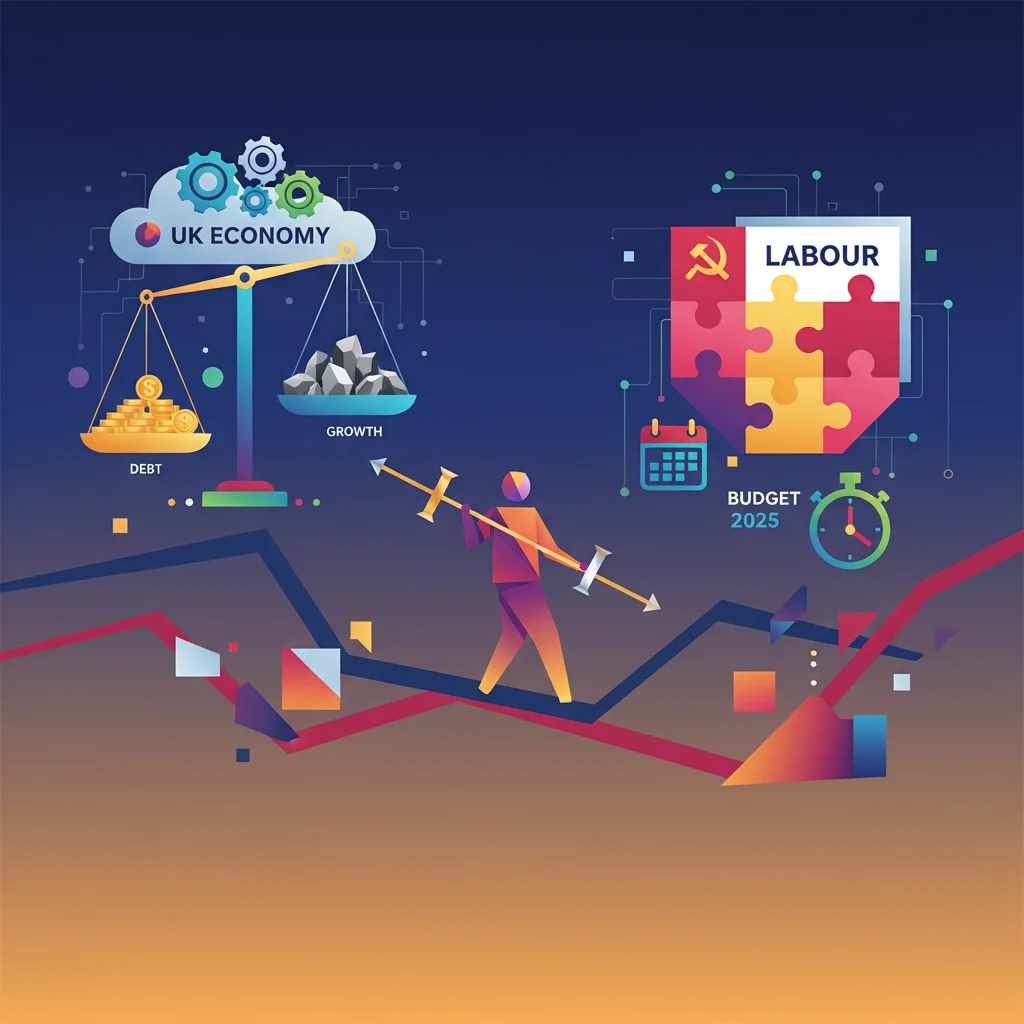
Navigating the Fiscal Tightrope: Labour’s Pre-Budget Balancing Act and What It Means for the UK Economy
The High-Stakes Prelude to Budget 2025
As the UK gears up for Budget 2025, the political and economic landscape is charged with anticipation. While the Conservative government holds the pen, the opposition Labour Party is under an intense spotlight. Every statement, every policy adjustment, is being scrutinized by voters, business leaders, and the financial markets. In a crucial pre-budget week, a series of strategic shifts from Labour—notably a tax U-turn and a nuanced softening on workers’ rights—has sent ripples through the spheres of finance and politics. As noted by the BBC’s Laura Kuenssberg, these moves are more than just minor tweaks; they are calculated signals in a high-stakes game for economic credibility ahead of a potential general election.
For investors, finance professionals, and business leaders, understanding the undercurrents of this political maneuvering is critical. It offers a glimpse into the potential fiscal direction of a future government and its likely impact on the UK economy, the stock market, and key growth sectors like financial technology. This is not just about political posturing; it’s about the fundamental stability and predictability that markets crave. Labour’s challenge is to balance the expectations of its traditional base with the pressing need to present itself as a safe pair of hands for the nation’s finances.
The Core Conundrum: Credibility vs. Ideology
At the heart of Labour’s recent actions lies a classic political dilemma: how to win power without alienating the very groups you need to govern effectively. The party’s recent history is a shadow it’s desperate to escape; the memory of the 2019 election and concerns over radical economic policies still linger in the minds of many in the business community. To counter this, the leadership has embarked on a mission to de-risk the Labour brand, particularly on economics.
The Tax U-Turn: A Signal to the Markets
One of the most significant recent shifts involved a U-turn on a key tax policy. While specific details can change, the broader theme has been a move away from large, un-costed spending commitments or wealth taxes that could spook the markets. This strategic retreat is a direct attempt to build fiscal credibility. By signaling a more cautious approach, Labour aims to reassure investors that there will be no ‘shock and awe’ overhaul of the tax system. This is a deliberate echo of the “prawn cocktail offensive” of the 1990s, where New Labour actively courted the City of London to prove its economic competence.
For the world of investing, predictability is paramount. Sudden shifts in corporate or personal taxation can dramatically alter company valuations and investment returns. Labour’s current stance suggests an understanding that capital is fluid and will flee uncertainty. By moderating its tax ambitions, the party is effectively telling the stock market and international investors that a Labour government would prioritize stability over radical reform.
The Workers’ Rights “Climbdown”
Simultaneously, reports of a partial “climbdown” on workers’ rights have emerged. This is an even trickier balancing act. Labour’s historical ties to the trade union movement are a core part of its identity. However, business leaders have expressed concerns that proposed changes could introduce rigidity into the labour market, potentially stifling growth and investment. The reported softening of these proposals is another clear signal to the business community that Labour is willing to listen and compromise. It suggests a move towards a more collaborative model of banking on tripartite agreements between government, unions, and businesses, rather than imposing top-down regulations. This pragmatic approach, as highlighted in the initial BBC analysis, is designed to neutralize Conservative attacks that Labour is “in the pocket of the unions.”
The Silent Epidemic: Why the Justice System is Losing the War on Financial Fraud
Implications for the UK Economy and Key Sectors
These pre-budget signals have tangible implications for the UK’s economic future. A government perceived as stable and predictable can lead to lower borrowing costs, a stronger currency, and increased foreign direct investment. Conversely, the perception of risk can trigger market volatility and capital flight.
The Future of UK Fintech and Financial Technology
A key sector watching these developments closely is the UK’s world-leading fintech industry. This sector thrives on a combination of innovation, light-touch regulation, and access to capital. A potential Labour government’s approach to financial technology will be critical. A stable corporate tax environment and continued support for regulatory sandboxes would be seen as highly positive. Furthermore, any policy direction on emerging technologies like blockchain and central bank digital currencies (CBDCs) will be carefully analyzed. Labour’s current pro-business signaling suggests they would be unlikely to disrupt this engine of economic growth, but the fintech community will be looking for more than just passive support; they’ll want a proactive strategy to maintain the UK’s competitive edge.
Investor and Stock Market Sentiment
For those involved in trading and asset management, political risk is a key variable. The primary impact of Labour’s recent moves has been to reduce that risk premium. The FTSE and sterling are less likely to react negatively to a potential Labour victory if the party is perceived as centrist and fiscally responsible. However, investors will be looking for concrete details beyond the headlines. The actual content of the party’s manifesto, particularly regarding capital gains tax, dividend taxation, and pension rules, will ultimately drive market reactions. The current strategy has calmed nerves, but the calm is fragile and contingent on continued messaging discipline. The political narrative of this week is a crucial first step in a much longer campaign to win over the market’s trust.
Best-Case vs. Worst-Case Scenarios for Labour
The impact of this Budget week and the subsequent political maneuvering can be viewed through a spectrum of potential outcomes for the Labour Party. Below is a summary of the best- and worst-case scenarios from a strategic perspective.
| Scenario | Description & Implications |
|---|---|
| Best-Case Scenario: “The Goldilocks Position” | Labour successfully convinces the public and markets that it is fiscally credible without appearing to abandon its core principles. The Conservatives’ budget fails to move the polls, solidifying Labour’s image as a government-in-waiting. Investor confidence in the UK remains stable or improves, and business leaders begin to actively engage with Labour’s policy teams. This creates a smooth runway into a general election. |
| Worst-Case Scenario: “Falling Between Two Stools” | The party’s shifts are seen as opportunistic and unprincipled. Their base becomes disillusioned, viewing the moves as a betrayal of workers and a capitulation to corporate interests. Simultaneously, the financial markets remain skeptical, viewing the changes as purely cosmetic and fearing a return to older policies post-election. The Conservatives successfully paint Labour as weak and divided, causing their poll lead to narrow and reintroducing volatility into the political and economic outlook. |
Conclusion: The Long Road Ahead
The events of Budget week have set the stage for the next phase of the UK’s political and economic narrative. Labour’s strategic pivot towards the center is a clear and calculated effort to build a broad coalition of support, encompassing everyone from traditional voters to FTSE 100 CEOs. By prioritizing fiscal credibility, they are directly addressing their perceived greatest weakness and attempting to create an environment of economic stability that will be welcomed by investors.
However, this is only the beginning. The path to a general election is long, and maintaining this delicate balance will be a monumental challenge. For business leaders and finance professionals, the key takeaway is that the political landscape is becoming more defined. The “unknowns” surrounding a potential Labour government are slowly being replaced by a more predictable, albeit more cautious, policy platform. The coming months will require close observation of how these strategic signals translate into concrete policy, as this will ultimately determine the future direction of the UK economy and the opportunities within it.
From Community Exchange to Global Economy: The Untapped Financial Power of the Circular Model